October 22, 2026
Retention beyond the welcome email
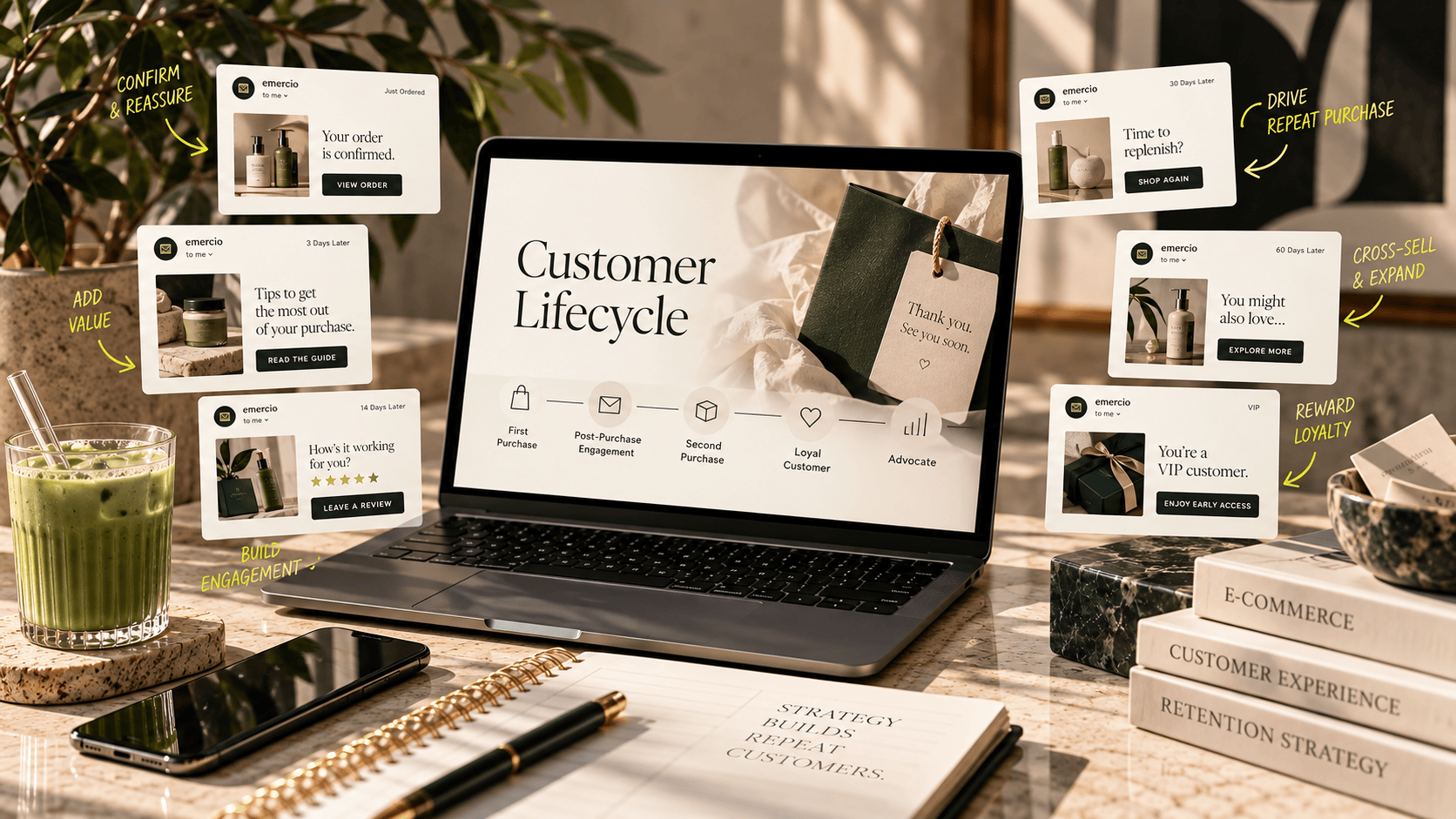
Retention Beyond the Welcome Email.
How to think about repeat purchase and lifecycle strategy.
The welcome email gets the order. But what happens next is what builds a real business. Retention isn’t a single automation. It’s the entire experience a customer has after their first order.
For growing Shopify brands, acquisition can feel like the main event. New traffic, new subscribers, new customers. Yet the economics of growth often improve when more of those customers come back without needing to be won over from scratch.
That requires a shift: from sending more messages to understanding why someone would want to purchase again, when that need might arise, and what could prevent it.
Think in lifecycles, not just transactions.
Customers don’t all need the same email at the same time. Their needs change as their relationship with your brand develops.
A thoughtful lifecycle strategy responds to those changes instead of treating the entire list as one audience.
Design the experience around what comes next.
The period between the first and second order deserves more attention than another generic promotion. The right next step depends on what was purchased and how the product is used.
- Set clear expectations after checkout: shipping, delivery, setup, and support.
- Help customers succeed with care instructions, tutorials, or product education.
- Recommend a complementary item or replenishment at a relevant moment.
- Make reordering simple, especially on mobile.

Track what actually matters.
Open rates are useful diagnostics, but they aren’t the business outcome. Look at how customer behavior changes over time.
Share of customers who have placed more than one order.
How long it typically takes customers to return.
Revenue or contribution value associated with a customer over time.
How purchasing behavior differs by first-order month or segment.
Retention is a system, not a single tactic.
Strong retention comes from several connected experiences. The most effective mix depends on your purchase cycle, product category, customer needs, and operational capacity. Start with the highest-friction moment rather than installing every tool at once.
Five questions worth asking.
The smartest retention plan begins with customer understanding—not a larger automation map.
What would naturally make someone buy again?
Identify replenishment, gifting, seasonal needs, complementary products, and repeat-use occasions.
When is the customer actually ready?
Use product-use cycles and first-to-second-order data instead of arbitrary delays.
What could make the first experience disappointing?
Review delivery promises, packaging, product instructions, support, and returns.
Which customers should receive different messages?
Start with practical segments such as first-time buyers, repeat buyers, category purchasers, and lapsing customers.
How will we know the strategy is working?
Measure incremental repeat orders, cohort performance, margin, and unsubscribes—not only email-attributed revenue.

The next sale starts with the first experience.
Acquisition introduces customers to your brand. But what happens after that first purchase determines whether you’ve gained a one-time buyer or started building a lasting customer relationship.
Too often, retention strategies begin and end with automated emails, loyalty points, or discount codes. While these tactics have their place, they can’t compensate for a disappointing product experience, confusing communication, or a brand that gives customers little reason to return.
The strongest retention strategies start by understanding the customer, not by adding another automation.

For growing e-commerce brands, that means taking a closer look at the moments that matter: how customers experience their first order, whether they understand the value of what they’ve purchased, when they might naturally need something again, and how easily they can take that next step.
You don’t need an elaborate lifecycle program to get started. Begin with three priorities:
Make the first purchase experience exceptional.
Clear communication, thoughtful packaging, helpful product education, and responsive support build confidence.
Identify the natural reason to return.
Whether it’s replenishment, complementary products, gifting, or a new need, give customers a relevant reason to make their next purchase.
Measure behavior, not just engagement.
Look beyond email opens and clicks. Pay attention to repeat purchase rates, time between orders, customer lifetime value, and the profitability of returning customers.
Retention isn’t about convincing customers to buy more often than they need to. It’s about creating an experience worth coming back to.
Because sustainable e-commerce growth isn’t just about how many customers you acquire. It’s about how many choose to return—and why.
Keep exploring.


Build a smarter retention strategy.
Turn first purchases into lasting customer relationships with an e-commerce strategy built around your brand.
Start a conversation ↗